Our Story
Soap has been part of our family story for generations.
Long before ALATI existed, the women in our family on the Greek island of Kalymnos made traditional soap by hand.
They used what the land and sea gave them. Fresh olive oil. Mountain herbs. Rosemary. Thyme. Sea salt. Animal fats when needed. Time. Patience. Knowledge passed from one generation to the next.
This was not luxury. This was everyday life. They washed their bodies with it. They washed their hair with it. They washed their clothes with it. Soap was made properly because that was simply how things were done.
Kalymnos. Family heritage.
The family tradition comes from Kalymnos in the Dodecanese, Greece. From the stories passed down through our family, this tradition reaches back at least to the late 1800s, and likely much earlier.
My grandmother Poppy made traditional olive oil soap. She infused olive oil with thyme, rosemary, sage, Greek mountain herbs and other botanicals from the island. The way she worked — quietly, slowly, using what the land gave — still inspires the way ALATI works today.
Darwin — The Next Chapter
The story began in Greece. The next chapter is written in Darwin.
ALATI is handcrafted in Darwin, Australia. This is not pretending to be European. This is Greek family tradition continued in Australia’s Top End.
Chrissa’s journey.
After cancer treatment, chemotherapy and stem cell transplant recovery, I became deeply aware of what touched my skin every day. My skin had become dry, fragile, irritated and uncomfortable.
Alongside medical care, I began returning to simple ingredients and traditional soap making. I began making soap in 2020. I learned from family history, from my mother, from courses, from study and from practice. I have since trained in both hot process and cold process soap making.
This is my own experience, not a medical claim. But returning to simple, properly made soap changed the way I thought about what we use every day.
Castile Soap
Some things should never be rushed.
I also make true Castile soap. Castile is pure olive oil soap. It takes patience. It can take many months — sometimes close to a year — to fully cure and mature.
It is slow, simple, and deeply connected to the family story.
Tallow Soap
Good soap does not need to be complicated. It needs to be made properly.
ALATI also makes tallow soap — another old-world tradition. In older communities, people made soap using what they had. In olive-growing regions, olive oil was used. In farming communities, animal fats such as goat, sheep or beef fat were used.
We use grass-fed tallow because it creates a beautiful, creamy, long-lasting bar.
Over the years I experimented with many traditional soap recipes. I first learned traditional olive oil Castile soap inspired by my grandmother and family traditions from Kalymnos. As my own soap making developed, I discovered that handcrafted tallow soap became the foundation of ALATI — because of its beautiful lather, longevity, traditional history, and simplicity.
Adonis
A son, learning beside his mum.
After my second stem cell transplant, my son Adonis — then thirteen — began learning beside me. He wanted to help his mum. He also wanted to learn how to build something meaningful.
His simple statement became part of ALATI:
“It’s not just what goes in your body, it’s what goes on your body too.”— Adonis
Why Traditional Soap?
Made the old way. Trusted today.
ALATI specialises in handcrafted tallow soap made using traditional soap-making methods. Alongside our tallow range we also produce small seasonal batches of traditional Castile soap — which requires an extended curing period — and our signature Sea Mineral Salt Bar, inspired by our family’s Greek heritage.
Why Tallow?
A traditional ingredient, used thoughtfully.
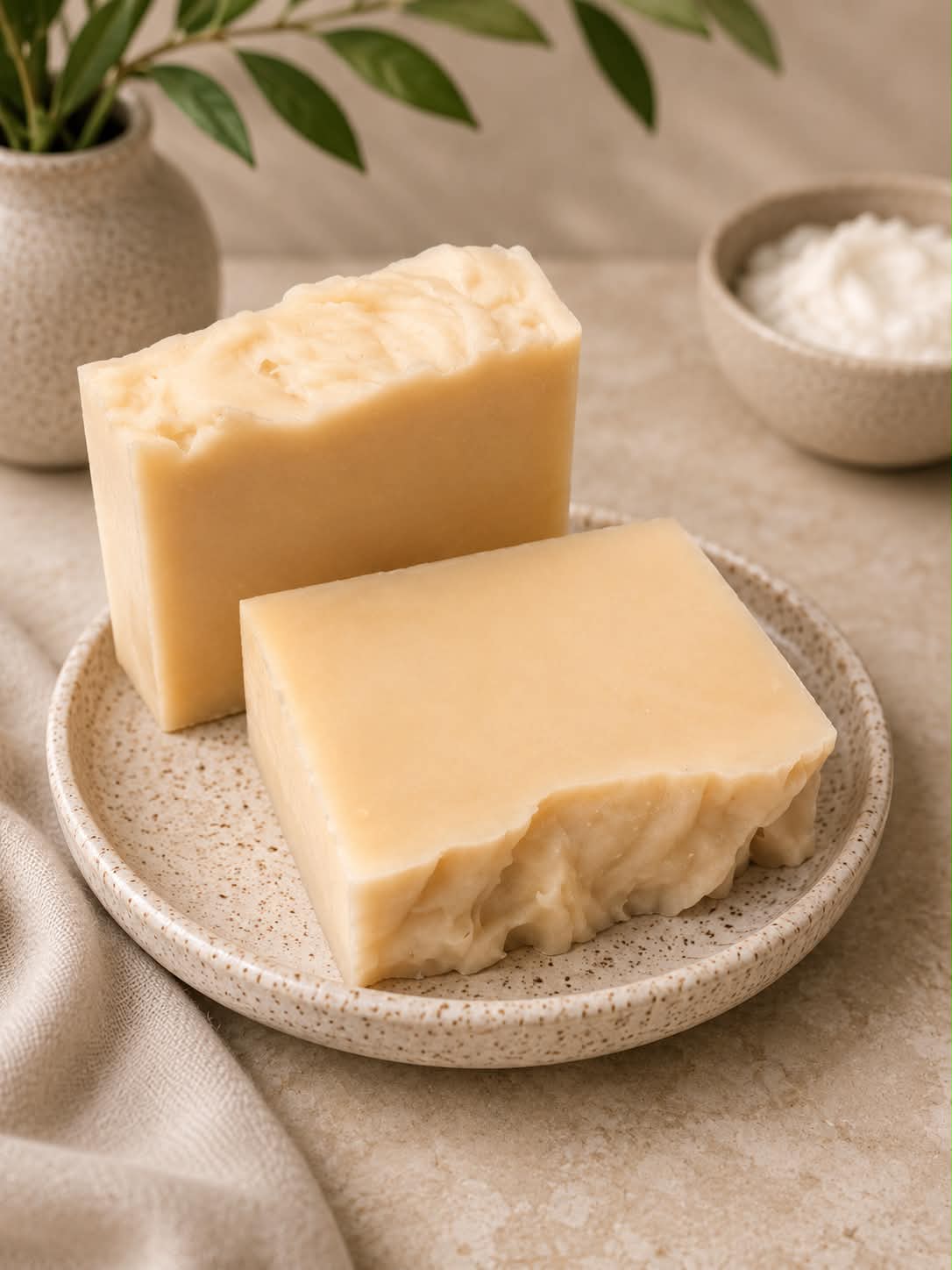
Tallow has long been valued in traditional soap making because it helps create a firm, creamy, long-lasting bar.
For most of human history, soap was made with what was available. Olive oil in olive-growing regions, animal fats in farming communities. Tallow soap is one of the oldest, most honest soap traditions there is.
At ALATI, we use grass-fed tallow paired with olive, coconut and castor oils. Nothing more complicated than that.
Tallow naturally contains fatty acids commonly found in animal fats, and before saponification contains small amounts of fat-soluble vitamins A, D, E and K. The finished soap is, simply, soap — thoughtfully made.
For me personally, returning to simple, properly made soap changed the way my skin felt in everyday life. That is my experience, not a promise. — Chrissa
Naturally Retained Glycerin
What handmade soap keeps that mass-produced bars don’t.
When oils and fats saponify into soap, glycerin is produced as a natural by-product. In traditionally made handmade soap, that glycerin stays in the bar.
Many mass-produced cleansing bars on supermarket shelves are not traditional soap at all — they are detergent bars where the glycerin has been removed and sold separately. We don’t do that. The glycerin stays where it belongs.
Castile Soap
Some things should never be rushed.
Castile is traditional olive oil soap — the oldest form of soap in our family’s story. True Castile uses olive oil as its single oil and cures slowly. Sometimes for many months. Sometimes close to a year.
The bar that comes out the other side is mild, simple, and quietly beautiful. It is the soap our grandmothers made.
Hot Process & Cold Process
Two old methods. Both are ours.
ALATI uses both hot process and cold process methods. Each has its place.
Cold process allows the soap to saponify slowly at room temperature, then cure on open racks for weeks. The finish is smooth and quietly traditional.
Hot process cooks the soap through during making, producing a bar with a different rustic character and a shorter cure time.
Both are old. Both are honest. Neither is rushed.